
China Sourcing Update (April 2026): VAT Rebate Cuts & The New Digital Yiwu Strategy
Critical April 2026 updates for importers: How China’s VAT export rebate changes and Yiwu’s new digital trade center impact your sourcing costs and speed.
Xander Zhang
4/3/20261 min read
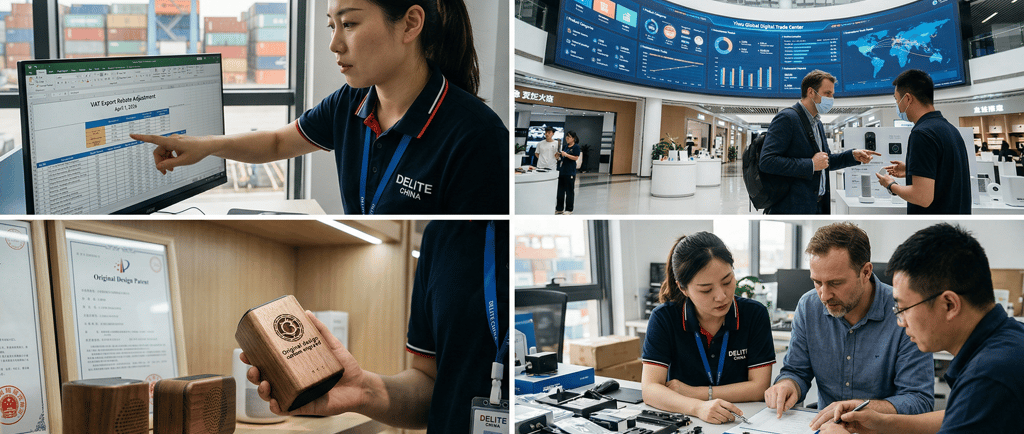
As we move into the second quarter of 2026, the landscape for sourcing small commodities from China is shifting from "volume-driven" to "policy-driven." If you are managing a supply chain from Guangzhou or Yiwu, two major updates this week require your immediate attention to protect your margins.
1. The April 1st VAT Rebate Shockwave
Effective April 1, 2026, the Chinese Ministry of Finance has officially implemented the reduction and, in some sectors, the complete removal of export VAT rebates.
What changed: Hundreds of HS codes, particularly in the solar, battery, and certain low-end manufacturing sectors, saw rebates drop from 9% to 6%, or disappear entirely.
The Impact: This isn't just a "factory problem." Suppliers who previously factored a 13% or 9% rebate into their thin margins are now issuing price adjustments. If you are currently negotiating annual contracts, ensure your "Price Adjustment Clauses" account for these fiscal changes rather than just raw material fluctuations.
2. Yiwu’s "Sixth-Generation" Market Goes Live
The Yiwu Global Digital Trade Center has just completed its first full month of operations since the Horse Year Spring Festival. For foreign buyers, the "Digital Yiwu" isn't just a buzzword anymore; it’s a logistical reality.
IP-Driven Products: The market is pivoting away from "copycat" goods toward high-end, IP-driven designs. We are seeing a 25% increase in booths offering original design manufacturing (ODM) for smart home devices and drones.
AI-Assisted Sourcing: The new platform integrates real-time multilingual translation and AI-driven quality tracking. If you are sourcing remotely, the transparency of the "factory-to-port" data flow has significantly improved, reducing the need for third-party inspection in the preliminary stages.
3. Logistics: The "Secondary Route" Strategy
Ocean freight rates are currently showing a rare early-summer softening. With port congestion at a two-year high in major hubs, smart importers are shifting to "secondary routes"—utilizing smaller ports in Southeast China to bypass the Ningbo-Shanghai bottleneck.
Pro Tip: Watch the Yuan (RMB) valuation closely this month. Analysts suggest an 18-25% undervaluation persists; any sudden appreciation mid-year could wipe out your shipping savings.