
The Blind Spot in Modern Sourcing: Why Most Factories Won't Tell You Your Design is Unbuildable
Most factories are volume-driven "Yes-men" who agree to designs they can't reliably build. This gap between design and feasibility leads to failed prototypes and costly recalls. True sourcing success means moving beyond order-takers to partners who challenge your design’s viability before production starts.
5/11/20262 min read
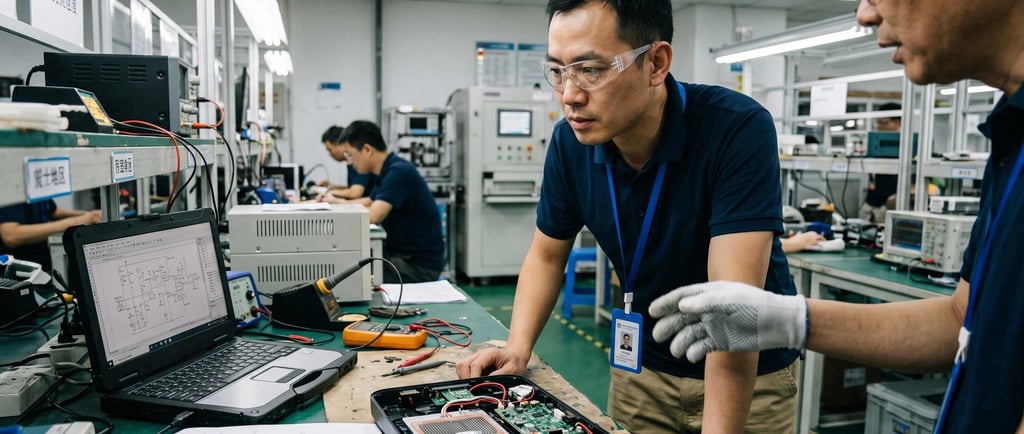
The Industry Reality: The "Yes-Man" Factory Culture
In the global supply chain, there is a systemic disconnect between the design studio and the factory floor. Most manufacturing partners operate on a "volume-first" logic. Their goal is to keep the machines running. When a brand presents a complex ODM design, the default response from the factory is often a polite "Yes, we can do it."
However, this "Yes" is rarely backed by a rigorous technical feasibility study. It is a "Yes" to the order, not a "Yes" to the engineering integrity.
1. The Missing Link: Why Development is Ignored
Most traditional factories are built for repetition, not innovation. Their overhead is optimized for mass production, not for the high-level engineering required to validate a new concept.
The Conflict of Interest: Deep development takes time, specialized talent, and money—none of which produce immediate revenue for a factory.
The Consequence: Critical issues like thermal management, component placement, or material stress are often ignored until the first mass-production run fails. By then, the brand has already invested in tooling and marketing, leaving them in a sunk-cost trap.
2. The "Hidden" Costs of Bypassing Feasibility
When a manufacturing partner treats your technical specs as a "suggestion" rather than a problem to be solved, the brand inherits all the risk.
Engineering Waste: Designing a product three times because the first two versions were technically flawed.
Quality Variance: A product that works in a controlled prototype environment but fails under real-world conditions (like fluctuating power via PD protocols).
Brand Erosion: Dealing with high return rates because the "cool design" wasn't engineered for durability.
3. Shifting the Focus: From "Can You Make It?" to "Is It Viable?"
Strategic sourcing is no longer about finding the lowest price per unit; it’s about finding the partner who has the courage to say "This design needs adjustment" before production begins.
The Role of Technical Validation: True value in the ODM space comes from Design for Manufacturing (DFM)—the process of optimizing a design so it is not only buildable but also scalable and reliable.
De-risking the Project: The real work happens in the gap between the concept and the factory. It’s the unglamorous, data-driven process of testing tolerances, verifying electronics, and ensuring that the final product actually delivers on the brand's promise.
Conclusion: Efficiency Through Integrity
The manufacturing world is full of factories that can follow instructions. It is dangerously short of partners who can critique them. To succeed in today’s market, brands must look beyond the "Yes-man" culture and prioritize technical feasibility as the foundation of their supply chain.
A project that is validated early is a project that survives the market.